
Looking for Getting Nerdy Dissection Models?
You’re in the right place.
If you’ve been searching for Getting Nerdy Scienstructable™ dissection models… Welcome! You found them. 🐸❤️
These are the same trusted Scienstructables™ you’ve used before – just in their new home at Inside Out Science. While the name has changed, the mission hasn’t: creating hands-on, humane, and classroom-friendly dissection and exploration models that actually work for teachers and students.
If you’ve used Getting Nerdy dissection models before, then you’ll feel right at home here at Inside Out. New here? You’re about to join tens of thousands of teachers all over the world who have discovered a way to teach anatomy and dissection that’s engaging, effective, and a whole lot more manageable. I’m so glad you’re here.

What’s changed (and what hasn’t)
What’s new:
- A growing collection of updated models and lab resources
- A stronger focus on humane, eco-friendly science instruction
- Everything in one place at Inside Out Science
What’s the same:
- The models you know and trust (formerly of Getting Nerdy)
- Thoughtful design for real classrooms
- Clear, student-friendly learning experiences
Over 34,000 ⭐️⭐️⭐️⭐️⭐️ reviews on TpT. Used and trusted by teachers all over the world.
Explore Inside Out Dissection Models
Not sure where to begin? Start with Inside Out’s most popular models – designed to work in real classrooms from day one:
The most popular starting point…
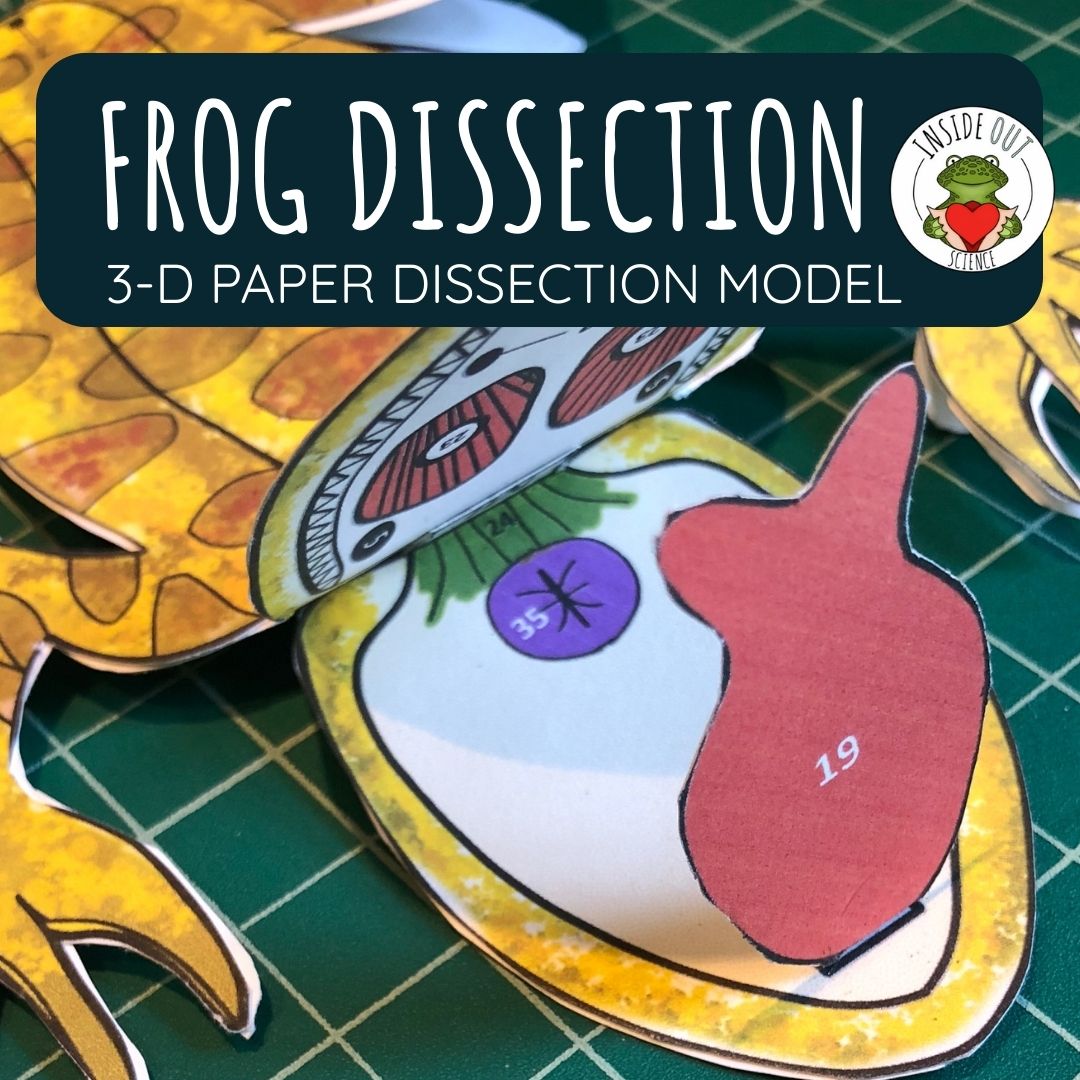
Perfect for introductory anatomy…
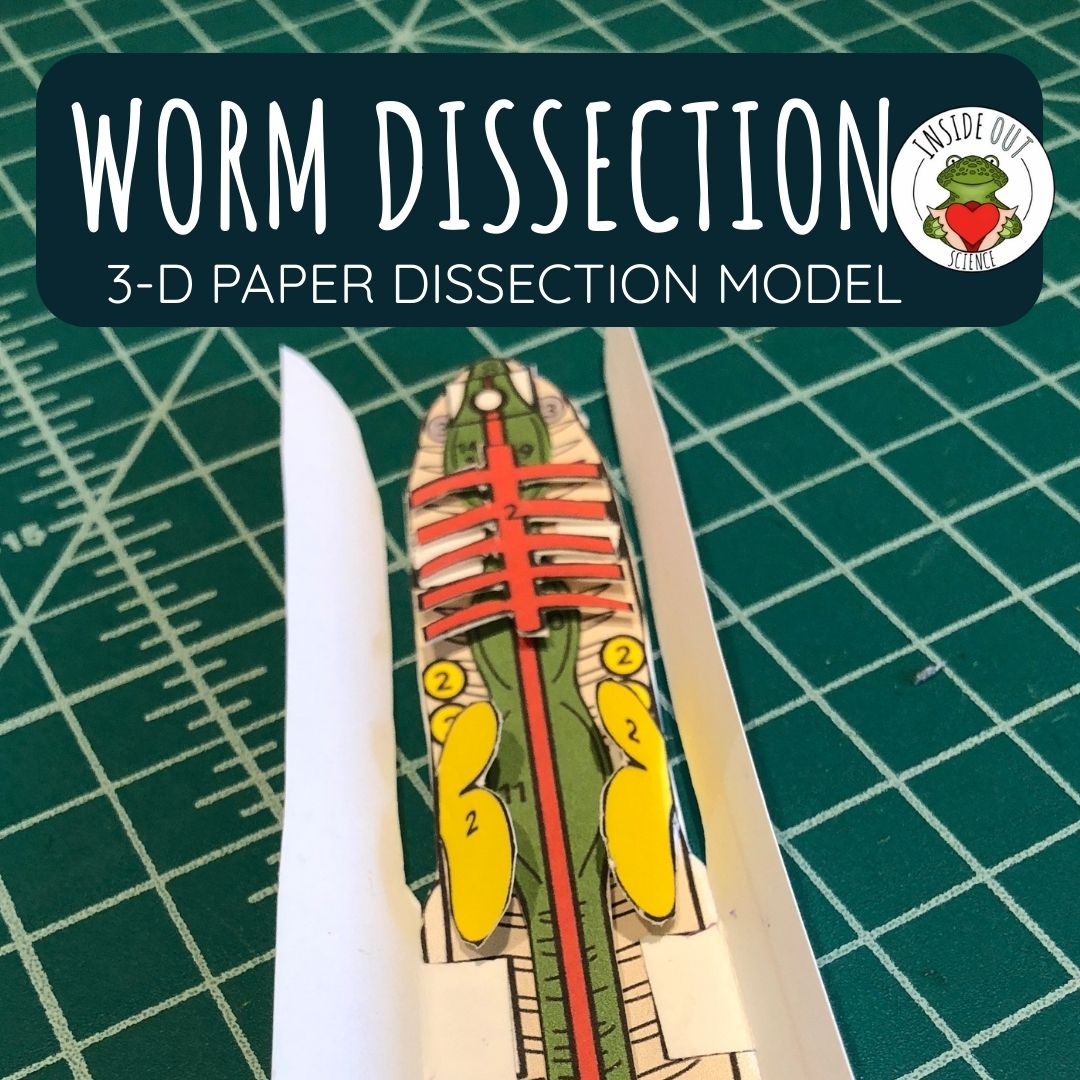
Quick, dissection-free win…
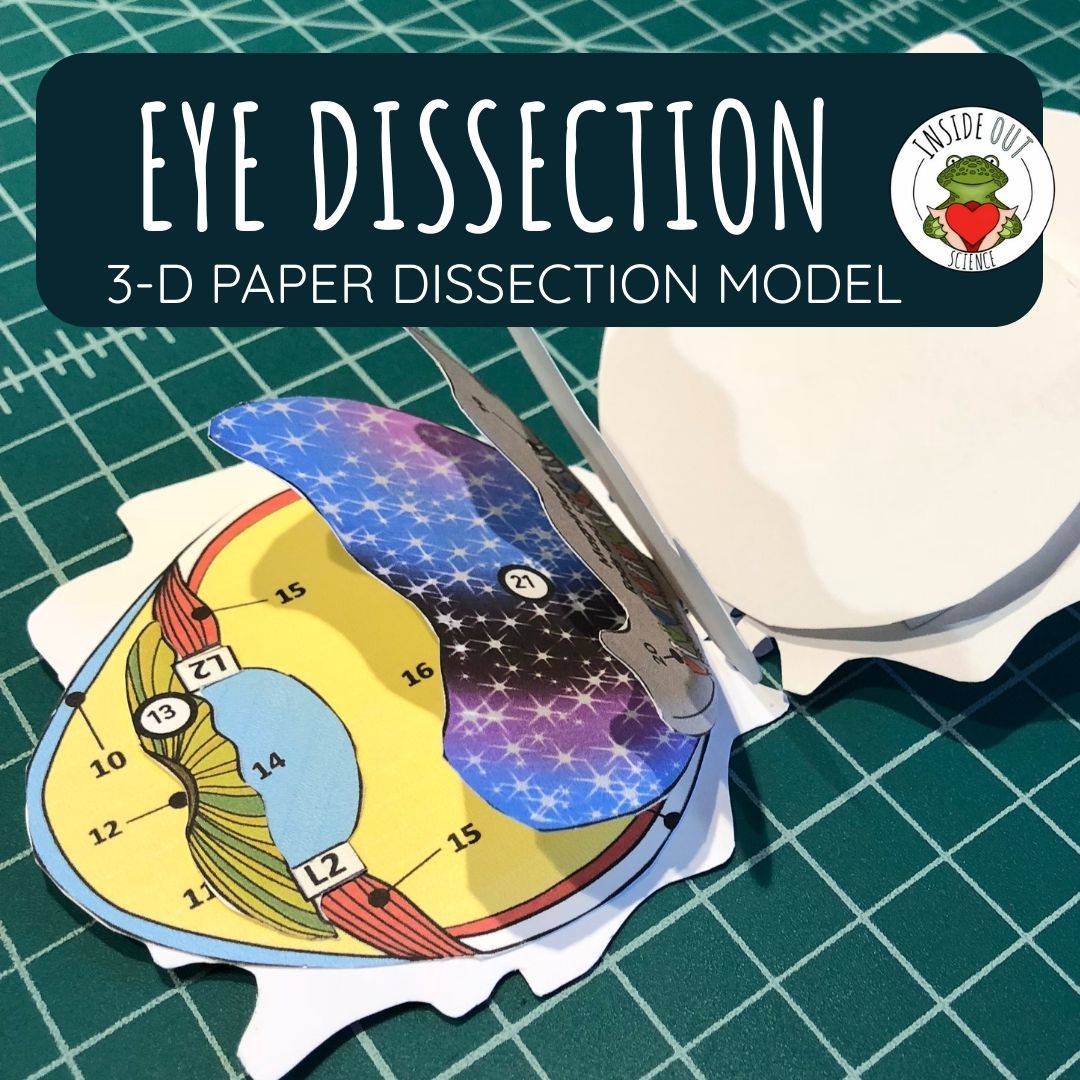
Want more? Browse the entire collection of vertebrates, invertebrates, organs and cells below!
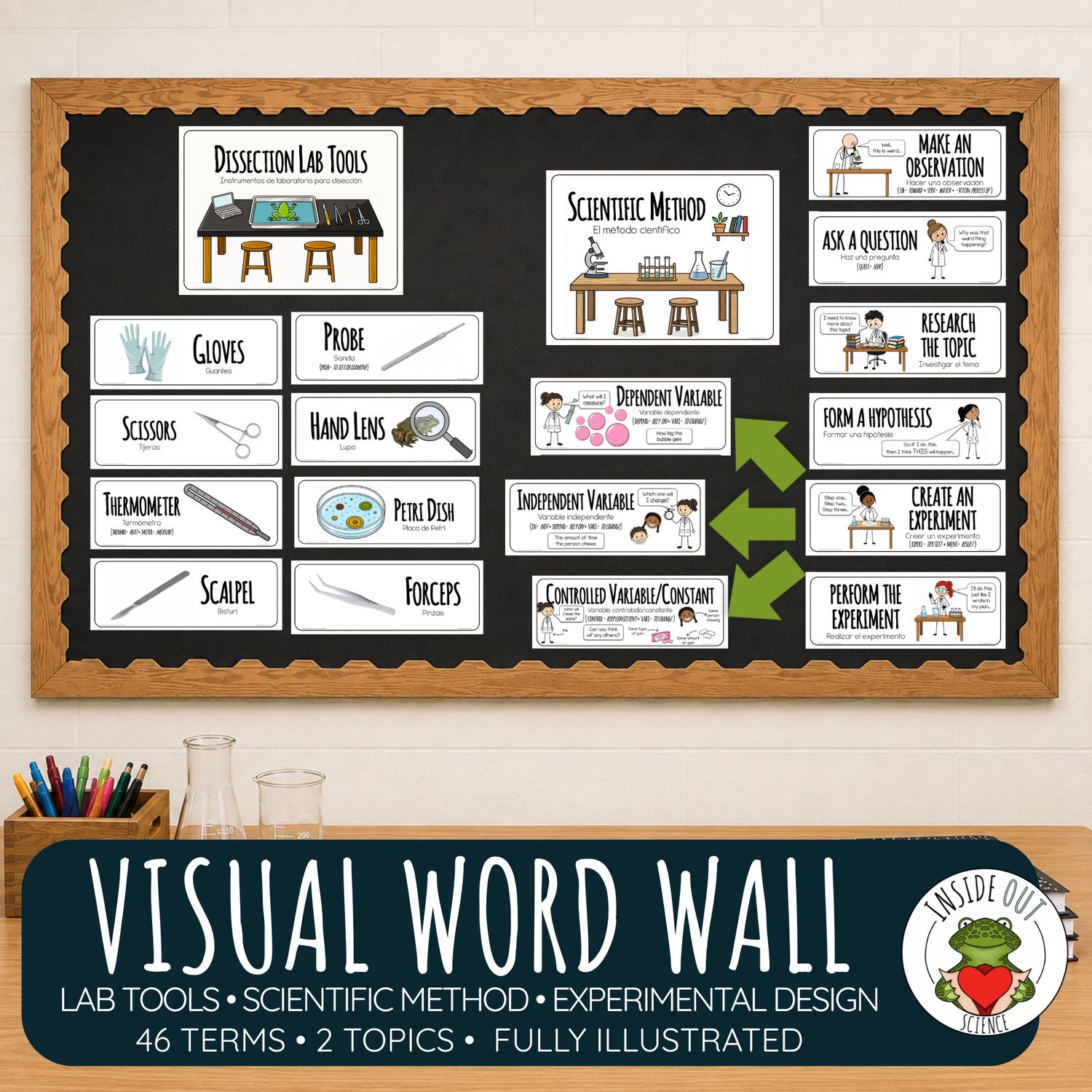
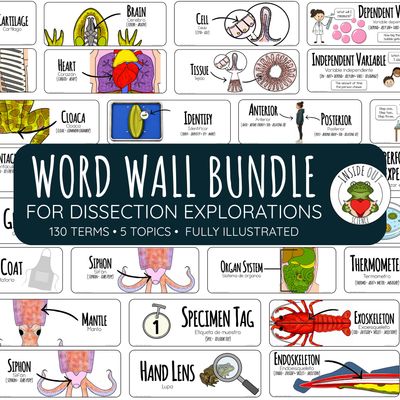
Build science vocabulary your kiddos can recognize, connect, and use with this fully illustrated Scientific Method & Lab Tools Word Wall! Designed for middle school and high school science classrooms, this visual vocabulary resource combines 46 essential science terms covering laboratory equipment, dissection lab tools, the steps of the scientific method, experimental design, variables, control groups, evidence, data, and more - complete with word roots, prefixes, and suffixes where applicable and is bilingual with English and Spanish translations!
Perfect for middle school science, general science, biology, anatomy & physiology and laboratory classrooms, these science vocabulary cards use consistent, carefully selected illustrations to help students connect terminology to real lab tools and the processes scientists use to design and conduct investigations. Students can visualize concepts such as independent and dependent variables, controlled variables/constants, control groups, hypothesis, observation, evidence, analysis, and making conclusions while recognizing common laboratory equipment they'll encounter during hands-on science activities.
And these aren't just vocabulary words printed on cards! These cards have visual scaffolding that is intentionally designed to support understanding without giving students all the answers, and scientific word parts that help students decode unfamiliar terminology. The included English + Spanish version supports multilingual, ELL, and ESOL learners, too. Use the cards as a scientific method word wall, science lab tools display, experimental design vocabulary reference, science vocabulary wall, or bilingual science resource throughout the school year.
WHAT'S INCLUDED in this SUPPLEMENTAL RESOURCE:
• NON-EDITABLE PDF word wall cards
→ 46 science terms
→ 2 topic/title cards
→ Complete English + Spanish version
→ Complete English-only version
→ Scientific roots, prefixes, and suffixes where applicable
→ Original visual supports, including laboratory equipment, scientific-method examples
⭐️LAB TOOLS (24 TERMS)
Standard laboratory and dissection equipment students may encounter during hands-on science investigations. Vocabulary includes terms such as beaker, graduated cylinder, test tube, Petri dish, microscope slide, dissecting tray, scalpel, scissors, forceps, probe, dissecting pins, ruler, balance, pipette, safety goggles and more.
⭐️SCIENTIFIC METHOD (22 TERMS)
Vocabulary supporting the process of scientific investigation and experimental design, from asking a question through communicating results. Terms include observation, inference, question, research, hypothesis, prediction, experiment, independent variable, dependent variable, controlled variable/constant, control group, data, evidence, analyze, conclusion, communicate results and more!
STUDENTS WILL:
• Build familiarity with essential science, laboratory, and experimental design terminology
• Use visual cues to connect vocabulary with laboratory tools and procedures
• Recognize common scientific roots, prefixes, and suffixes to help decode unfamiliar terminology
• Reference vocabulary during laboratory investigations, anatomy lessons, dissection activities, and scientific-method instruction
• Make connections among related terms instead of learning science vocabulary entirely in isolation
Why you're gonna love this:
This word wall gives students a consistent place to see the words, recognize their visual meaning, identify useful word parts, and make connections between related scientific concepts without turning the classroom wall into an answer key.
Use the cards as vocabulary is introduced, display an entire topic during a unit, or keep commonly used terms available throughout the year. Teachers can pull cards from the wall during instruction to compare related terms, identify roots and affixes, review vocabulary, discuss word relationships, or reinforce vocabulary during hands-on investigations.
For an interactive display, cut and laminate the cards, attach the hook/scratchy side of adhesive Velcro to the back, and hang a piece of felt on a classroom wall or bulletin board. The cards will stick directly to the felt, allowing you to move, group, remove, and rearrange vocabulary as you teach.
LOOKING FOR DISSECTION OR ANATOMY COMPANIONS TO THIS RESOURCE? TEACHERS LOVE IOS DISSECTION MODELS:
❤️ Jennifer S says, "Awesome and Incredible! One of my favorite downloads from TPT! This and the worm dissection are just so wonderful! My daughter and I both loved the ease and creativity of this packet! It made for a wonderful follow up to her home school curriculum and an excellent work sample to share with her contact teacher at the quarter."
❤️ Deborah A. says, "This was a great purchase and worth the cost. Very easy to prep. Used with 7th and 8th graders before our actual dissection. Was a great learning tool for them, coloring, cutting, and assembling the paper model allowed them to get familiar with the organs and structures they would be seeing during the dissection lab. Will definitely use again."
❤️ Carolyn S. says, "Listening to students discuss the function of the different organs was incredible!"
Here’s the Rules (TERMS OF USE (TOU)):
Everything contained within this document belongs to:
© Inside Out Science, 2025 to present. All rights reserved by author.
Purchasing this resource allows the licensee to copy and upload for single classroom use only. This resource may only be used by the original purchaser and their students and can only be accessible on password-protected sites such as Canvas, Google Classroom, or other password-protected digital learning platforms.
It is not for public display. This resource may not be uploaded publicly on the internet, on shared district or campus drives, or on social media for others to access. This resource may not be shared with other teachers without the appropriate licensing.
Please respect the Digital Millennium Copyright Act. Posting any content from this purchase to the Internet is in violation of the Copyright Act of 1976 and is punishable by law. Failure to comply with these terms of use is a copyright infringement. Images and elements found within these protected documents cannot be extracted and used outside of these files without express permission or license from the creator.
Need to get in touch? You can find me at: insideoutsci@gmail.com
SCIENTIFIC METHOD & LAB TOOLS WORD WALL | VARIABLES SCIENCE VOCABULARY | BILINGUAL © Inside Out Science, 2025 to present. All rights reserved by author.
Why teachers are switching to paper dissection models
More and more classrooms are moving toward humane dissection alternatives, and for good reason.
In real classrooms, teachers are running into challenges like:
- Rising costs: specimens are getting more expensive
- Inconsistent quality: shipments can arrive damaged, overly preserved, or difficult to work with
- Limited availability: certain specimens (and even specific sexes) aren’t always available
- Student hesitation: more students are uncomfortable participating
- Time and logistics: setup, cleanup, storage, and safety all add up
A more reliable, classroom-friendly approach:
Inside Out Science models keep the hands-on learning, while removing many of the barriers that make traditional dissection challenging. Students can:
- Explore anatomy in a clear, structured way
- Build understanding without the mess or unpredictability
- Participate fully, regardless of comfort level
Just as important, it’s about what students bring into that experience:
For many teachers, it’s not about replacing dissection entirely – it’s about giving students the chance to build confidence before they ever pick up a tool. The end goal being to create a classroom culture rooted in curiosity, care, and respect for the organism – not uncertainty or hesitation.
Whether you’re looking for a frog dissection alternative, an affordable way to do comparative anatomy, or a way to make dissection day more accessible, inclusive, and purposeful for all students, you’re in the right place.
A quick note: If you were redirected here from Getting Nerdy, nothing’s broken – you’ve just arrived at the new home for these resources. And if you’ve been searching, clicking, or asking around trying to find these models again, I’m really glad you made it here. 🐸❤️
Don’t miss what’s next
Be the first to hear about new models, grab classroom-ready resources, and get practical ideas you can use right away. Join my email list and I’ll send the good stuff straight to your inbox – no overwhelm, just resources you can actually use… simple, useful, teacher-tested, kid-approved.