
Bring Your Anatomy Models to Life Across the Entire Life Science Curriculum!
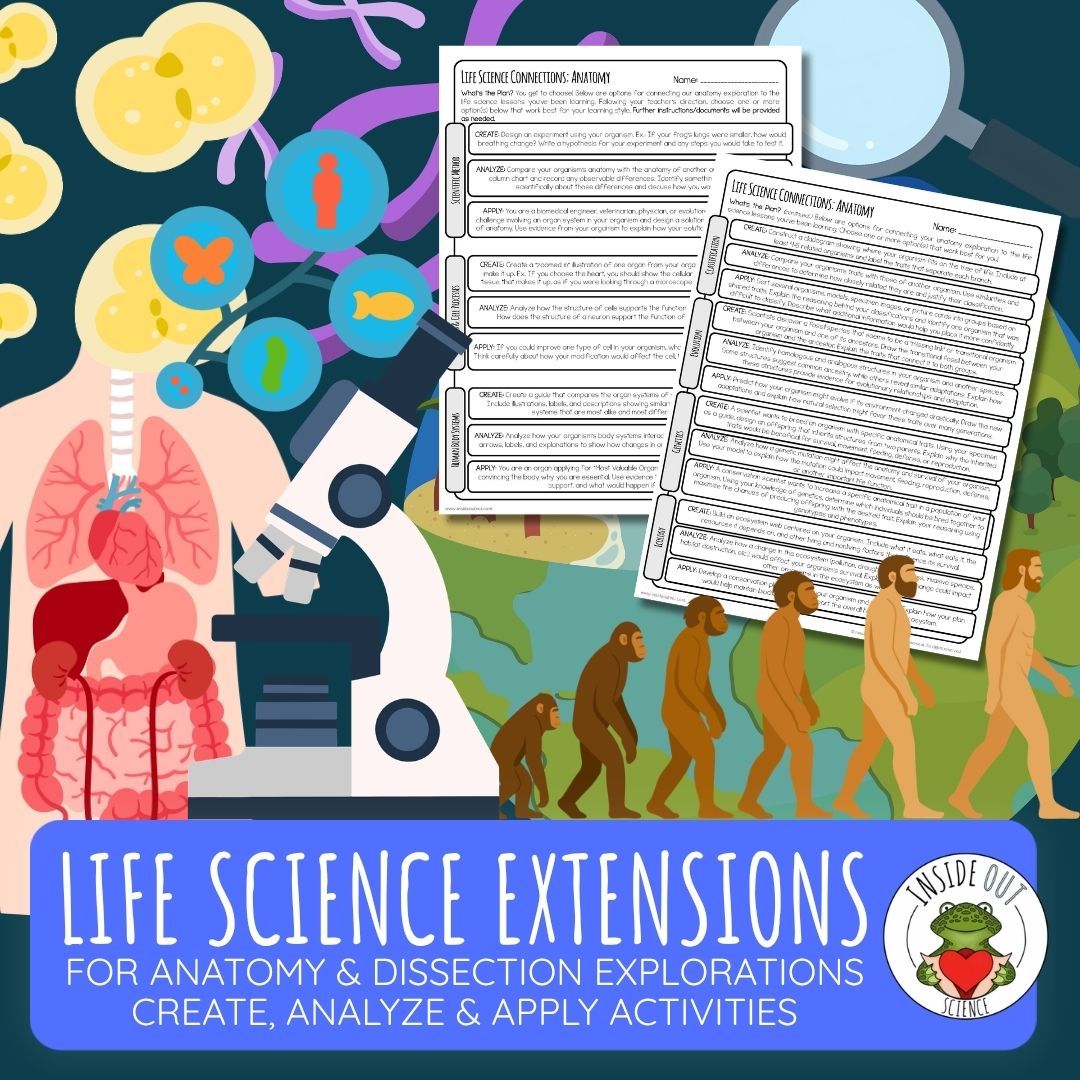
Looking for a meaningful way to connect anatomy, dissection, and life science concepts into one engaging lesson? Take your anatomy lessons beyond identification with these Life Science Extensions/Choice Boards! Packed with weeks of engaging, differentiated activities, transform any anatomy model or dissection activity into a cross-curricular learning experience by challenging students to think like scientists, engineers, geneticists, ecologists, and conservation biologists.
These Life Science Extensions connect anatomy lessons to the biggest concepts in life science—including the scientific method, cells, body systems, classification, evolution, genetics, and ecology.
Instead of stopping after identifying anatomical structures, students extend their learning through Create, Analyze, and Apply activities that encourage critical thinking, scientific reasoning, creativity, and real-world problem solving. These extension activities pair perfectly with paper dissection models, preserved specimens, virtual dissections, classroom anatomy models, and traditional biology labs.
Designed with built-in differentiation, each topic includes three levels of thinking that allow students to demonstrate their understanding in multiple ways while reinforcing core life science standards.
⭐️ CREATE
Students design, build, illustrate, or invent using evidence from their anatomy model.
⭐️ ANALYZE
Students compare, investigate, explain relationships, and support claims using scientific evidence.
⭐️ APPLY
Students solve authentic scientific problems, make predictions, develop conservation plans, engineer solutions, and connect anatomy to real-world biology.
Students will explore anatomy through the lens the following life science topics:
- Scientific Method
- Cells
- Human Body Systems
- Classification
- Evolution
- Genetics
- Ecology
⭐️ Opportunities for drawing, diagrams, scientific writing, and CER (Claim-Evidence-Reasoning)
⭐️ Cross-curricular connections to engineering, environmental science, health science, and scientific literacy
⭐️ Activities that work with paper models, preserved specimens, virtual dissections, and classroom anatomy models
Why you're gonna love this:
Unlike traditional worksheets, these extensions require students to use anatomical evidence from their specimen or model to investigate larger life science concepts.
Students move beyond labeling structures and begin asking questions like:
• How would this organism evolve if its habitat changed?
• How do body systems interact to maintain life?
• What happens when a genetic mutation changes an anatomical structure?
• How does anatomy influence survival within an ecosystem?
• How can scientific evidence be used to solve biological problems?
These activities transform anatomy into an interdisciplinary learning experience that strengthens critical thinking while reinforcing major life science standards.
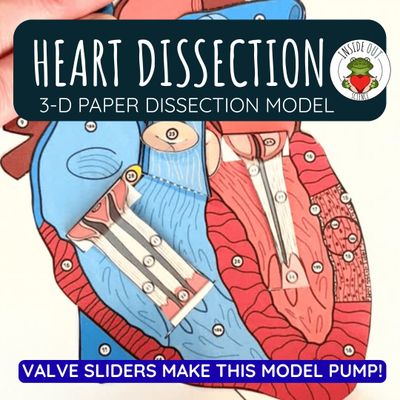
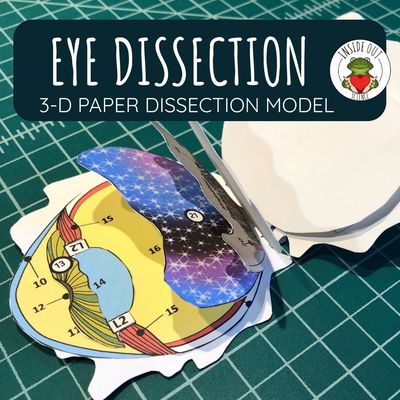
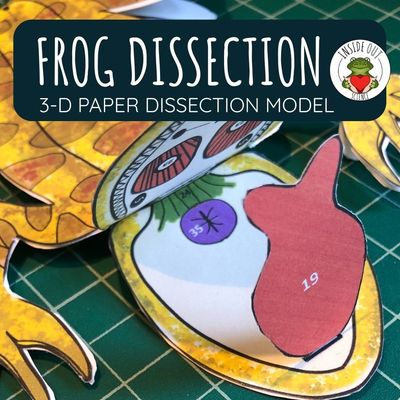
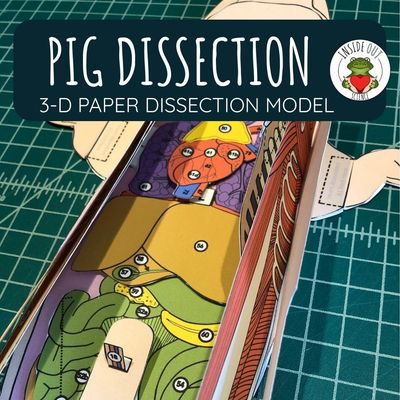
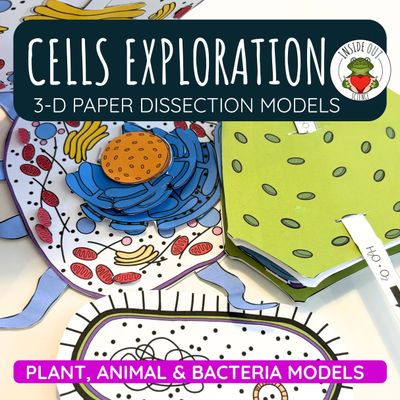
No AI has been used in the creation of any Inside Out Science Models. All models are meticulously researched, designed, created and hand-drawn by Mel, a real human being (that’s me!).