
Dissection days can spark excitement and curiosity, inspire future scientists, and bring life science concepts into scalpel sharp focus. But for some students, these activities can also present lots of barriers. Whether those barriers are physical, emotional, sensory, or cognitive, as educators, it is our job to ensure that all students have access to the same rich learning opportunities by differentiating dissection instruction, regardless of their starting point.
Differentiating dissection instruction means planning with your students in mind – including flexibility for both the teacher and the student, providing multiple modes of engagement, and creating inclusive resources. Here are several practical ways to make your dissection lessons accessible to every learner.
1. Offer Humane, Hands-On Alternatives
Not every student is ready—or willing—to participate in animal dissection. Having an alternative that still meets learning goals keeps everyone included.
-
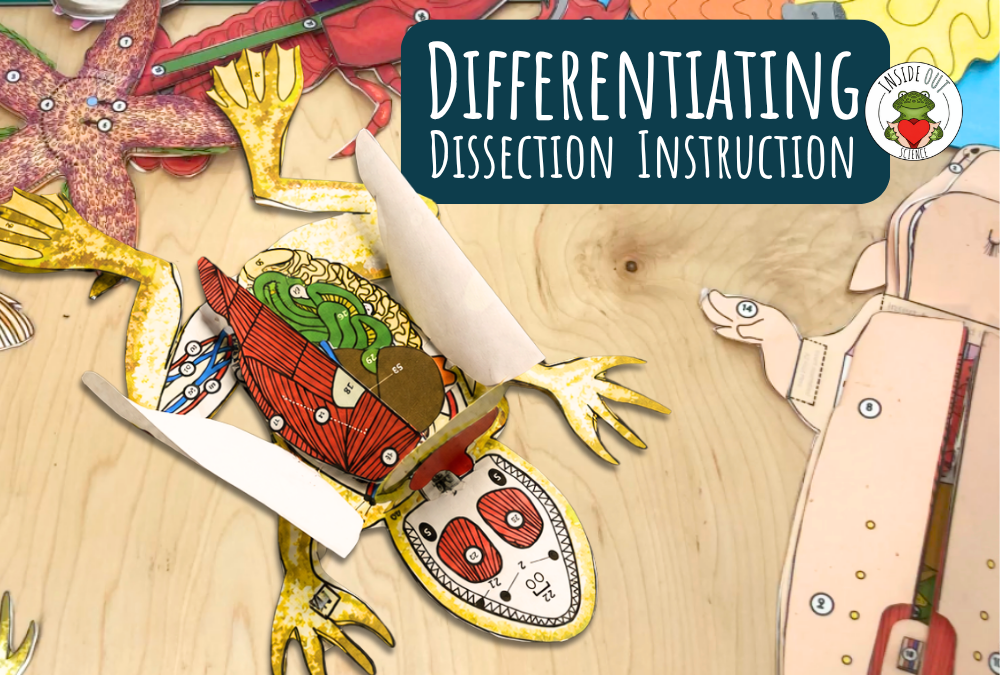
3-D Paper Dissection Models/Scienstructables™: IOS models (formerly Getting Nerdy) let students build, label, and explore accurate anatomical structures without using preserved specimens. They’re reusable, affordable, eco-friendly and practically mess-free.
-
Clay Organ Modeling: Another great option to show what you know, clay modeling encourages kinesthetic learners to build what they see without the stress of. true dissection.
-
Virtual Dissections: Technology has made it so easy to dissect virtually, and anatomy apps allow digital exploration without the sensory challenges. Check out options like Froguts or Victory XR’s VR and AR options.
2. Scaffold the Language and Vocabulary
-
Can’t stress enough how important science vocabulary is to understanding dissection and the bigger picture concepts of life science. Pre-teaching roots, prefixes, and suffixes will allow students to make connections through the dissection, making grasping and retaining knowledge that much easier. (Cardio = heart, Hepatic = liver, Neuro = nerves)
-
Throw vocab at them in every way possible. Multiple methods of exposure ensures that you’re hitting all the learning modalities, from the use of labeled diagrams, visual word walls, and bilingual glossaries, you can give students what they need at every possible opportunity.
-
Breaking things down into digestible chunks helps to prevent student overwhelm. Providing simplified definitions or visual mnemonics (think a drawn heart with the word heart inside) helps students further connect to the vocabulary. .
3. Adapt for Sensory Needs: Best Practices That Can Benefit Everyone
- Use odor-reducing trays or fume hoods. Many students (and teachers for that matter) struggle with the fumes that come from dissected specimen. Formalin-free specimen can be a bit more expensive though, so maybe this is a great place to ask for grant money or create a DonorsChoose site.
-
Offer glove and eyewear choices for comfort. All students should be wearing their PPE, but offering alternatives to meet their personal preference can ensure a level of comfort while doing something that may be out of their comfort zone.
-
Allow students to step away when needed and re-engage at their own pace. When students feel more in control of their experience, they are more likely to continue to engage in the process rather than shut down because they feel forced.
4. Modify the Task, Not the Goal
-
You want students to get the overall picture here. Odds are, they aren’t going to need to know every structure before they graduate high school, so reduce the number of structures some students need to identify. Pick a few main organs from each system and make sure they understand the main function.
-
Lend some extra support by providing graphic organizers or partially completed diagrams, helping those students who are overwhelmed to feel more successful.
-
You can modify for your kids who need a challenge, too. Extend dissection tasks for advanced learners by including comparative anatomy. creating a case study, or have them research adaptations.

5. Use Collaborative Grouping
Make your dissections smoother and ensure participation by assigning group roles so everyone contributes. Here’s a few roles you can try:
- Instructor: provides the instructions to other group members for making incisions or following other tasks.
- Lead Dissector: makes incisions and pins specimen.
-
Recorder: writes down information gathered during dissection, creating diagrams and noting any findings.
-
Photographer: captures and labels images.
-
Researcher: provides real-time background info.
6. Build in Reflection and Choice in the Assessments
Just like the lab itself, assessments should allow flexibility while targeting the same core objectives. Here are ways to make your grading more inclusive:
-
Choice Boards: Offer 3–4 options for demonstrating understanding – a written lab report, a labeled model, an illustrated poster, or a short video explanation to name a few – and allow students to choose what fits their strengths.
-
Tiered Diagrams: Provide diagrams with varying levels of labeling. Some may have blanks for every structure, while others may have a word bank or partial labels.
-
Oral Explanations: For students who struggle with writing, let them verbally walk you through the dissection or model, explaining structures and functions.
-
Model Reconstruction: Have few laminated models that use velcro as the assembly points and have students show their mastery by correctly reassembling a paper dissection model and labeling the parts.
-
Case Study Questions: Present short scenarios (e.g., “This organ is damaged; how might that affect the organism?”) that let students apply their knowledge instead of only recalling terms.
-
Notebook or Portfolio Assessments: Throughout the unit, have students collect notes, photos, sketches, and reflections, allowing them to build a complete picture of their learning over time.
Differentiating dissection instruction isn’t about lowering expectations—it’s about removing barriers to accessibility for every student. By combining humane, hands-on alternatives like Inside Out Science’s 3-D paper models with thoughtful scaffolding, sensory supports, flexible grouping, and varied assessments, you create an environment where every student can be curious, engaged, and successful.
When all students have access, dissection becomes less about who can “handle it” and more about shared discovery—a true hallmark of great science education.

Free Classroom Resource
If you’re preparing students for their first dissection, I’ve created a free Dissection Prep Pack that includes these must-have items:
- A lab safety student contract
- Student Dissection Choice Board
- Dissection Opt-Out Letter
- 4 Lab Safety Posters
This prep pack is designed to help you and your students walk into lab day feeling prepared, organized, and ready to learn. You can get it just by becoming an Inside Out subscriber. Click the link below or the image to the left to get yours now!
